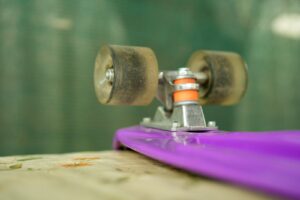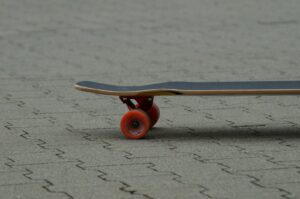
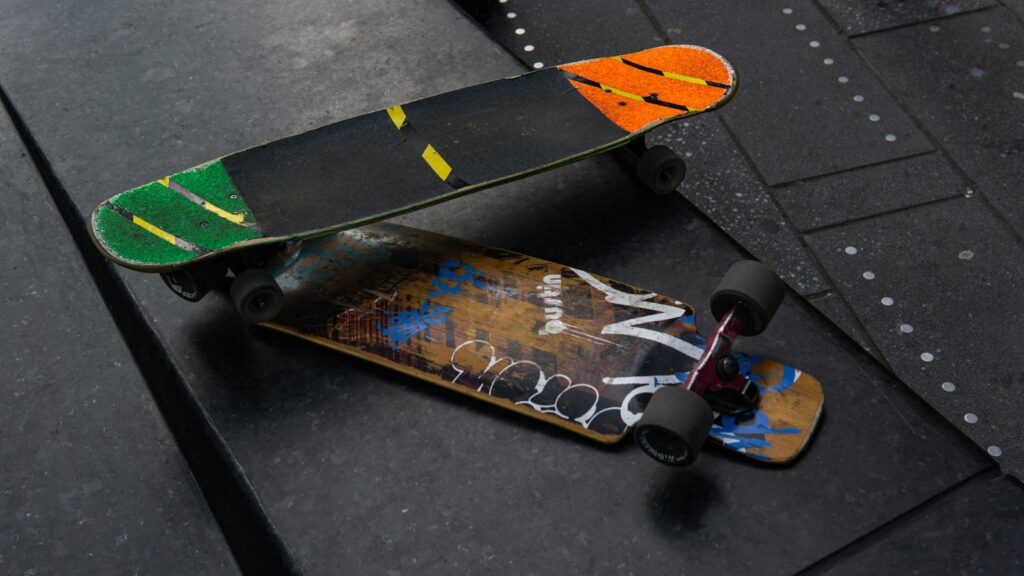
Longboards are best classified in two ways: what they are built to do and how the deck is shaped and mounted. A “downhill board” describes a purpose; “drop-through” describes how the trucks attach to the deck. The same board can belong to both categories.
For most riders, the right starting point is the intended use. Choose a cruising or low commuter setup for relaxed transportation, a dancer or freestyle board for footwork and tricks, and a purpose-built freeride or downhill setup only when your skills and riding environment justify it.
Longboard types at a glance
| Type | Best suited to | Typical design priorities | Main limitation |
|---|---|---|---|
| Cruiser | Relaxed riding and short trips | Comfort, easy turning, manageable size | Not optimized for high speed or technical tricks |
| Commuter or distance board | Efficient pushing over longer routes | Low ride height, stability, wheel clearance | Often larger and less convenient to carry |
| Carving board | Deep, flowing turns and pumping | Leverage over the trucks, responsive flex and turning | Highly responsive setups can feel lively to a new rider |
| Dancer | Cross-steps and moving footwork | Long standing platform, balanced shape, usable kicks | Bulky for transport and tight spaces |
| Freestyle board | Flat-ground tricks and technical combinations | Kicktails, manageable weight, predictable shape | Less efficient than a low board for distance pushing |
| Freeride board | Controlled slides and varied downhill maneuvers | Secure concave, stiffness and a predictable stance | Requires strong braking and board-control skills |
| Downhill board | Speed-focused descending | Stiffness, stability and precise control | Specialized and inappropriate for learning basic riding |
Choose by riding style first
Deck labels are useful, but they do not tell the whole story. Start with the riding you actually expect to do, then evaluate the mounting style, shape, flex and components that support that use.
Cruising longboards
A cruising longboard is designed for comfortable, uncomplicated riding: neighborhood loops, bike paths, boardwalks and short trips. Cruisers range from compact boards with a kicktail to full-size drop-through completes. The common goal is a smooth ride and predictable turning rather than maximum speed or technical trick performance.
A compact cruiser is easier to carry and can make tight turns, but a longer wheelbase generally feels less nervous. A lower deck reduces how far the rider must bend the supporting leg while pushing and foot braking. That can be useful for transportation, although low boards give up some leverage and obstacle clearance.
Read the longboard cruising guide for a fuller explanation of setup, technique and everyday riding.
Commuting and long-distance boards
Commuting boards prioritize efficient pushing, stability and the ability to roll over ordinary pavement imperfections. Drop-through, drop-deck and double-drop platforms are common because they can place the standing surface closer to the ground. Larger wheels may improve roll over cracks and rough pavement, but they require enough clearance to avoid wheelbite.
A board that is excellent for a long path may be awkward on stairs, public transit or crowded sidewalks. Portability, route quality and storage matter as much as outright rolling efficiency.
Carving and pumping boards
Carving means linking repeated turns across the direction of travel. Pumping uses coordinated body movement and turning to help maintain or build momentum without pushing as often. Boards for these styles usually emphasize turning leverage, grip and a responsive relationship between deck flex, trucks and bushings.
Top-mount decks are common because standing above the trucks provides direct leverage. Some drop-through boards also carve well, but the lower platform changes the feel. Flex can make a board lively and comfortable, yet the correct amount depends on the deck design and the rider’s weight. Follow the manufacturer’s flex guidance rather than assuming softer is always better.
For technique, see how to turn and carve on a longboard.
Dancing longboards
A dancer provides room for cross-steps, pivots and other footwork performed while the board is rolling. These decks are typically long, relatively wide and close to symmetrical, with usable nose and tail kicks. The large platform helps movement across the deck; the trade-off is extra length and weight.
Flex is common in dancing decks, but it is not a universal setting. Rider weight and the intended mix of dancing and freestyle matter. Current manufacturer pages often provide separate rider-weight recommendations for each flex option; those ranges are specific to that model and should not be transferred to another deck.
Freestyle longboards
Freestyle longboarding combines board tricks, spins, manuals and other technical movements. Freestyle decks normally use functional kicktails and a shape that behaves predictably when ridden in either direction. Compared with a pure dancer, a freestyle-focused board may be shorter or lighter to make the deck easier to move.
Dancing and freestyle overlap, so many decks sit between the two. Choose according to what you want to practice most: standing space and flowing footwork, or lighter handling and stronger kicks for tricks.
Freeride longboards
Freeride centers on controlled sliding, speed management and creative maneuvers on slopes. A freeride deck generally favors a stiff platform, secure concave and a stance that works in either direction. Wheel choice changes how readily the setup releases into a slide, but technique and conditions remain more important than a single hardness number.
Freeride is not the next step immediately after learning to stand and push. Riders should already be able to foot brake consistently, turn with control, recognize traffic and surface hazards, and practice slides in an appropriate closed area.
Downhill longboards
Downhill boards are specialized for descending at speed. They prioritize stiffness, a secure stance and predictable steering. Both top-mount and lowered designs exist because riders may prefer different balances of leverage, stability and braking access.
A downhill-shaped deck does not make high-speed riding safe. Speed magnifies setup problems, surface hazards and technique errors. New riders should not choose a downhill board because they assume a stable-looking platform will compensate for limited braking or cornering skills.
Deck mounting styles explained
Top mount
On a top-mount deck, the trucks attach beneath the deck in the same basic arrangement used on a conventional skateboard. The rider stands above the trucks, which provides strong turning leverage and a direct feel. Top mounts appear in cruising, carving, freestyle, freeride and downhill setups; the mounting style alone does not define the discipline.
Drop-through
A drop-through deck has openings that allow the truck baseplates to mount through the deck. This lowers the platform compared with mounting the same trucks underneath. The result is usually easier pushing and foot braking, with less leverage over the trucks than a comparable top mount.
See the dedicated guide to drop-through longboards for advantages, limitations and compatibility details.
Drop deck
A drop deck bends or steps the standing platform below the truck-mounting areas. The trucks may still be mounted beneath the deck. Riders gain a low platform and clear reference points for foot placement, while the shape can reduce usable standing space near the ends.
The drop-down longboard guide explains this construction in more detail.
Double drop
A double-drop board combines a dropped standing platform with drop-through truck mounting. It is one of the lowest common longboard layouts, which makes repeated pushing and foot braking less demanding. The compromises can include extra size, reduced ground clearance and little or no useful kicktail.
For a closer comparison, read the double-drop longboard guide.
Other deck features that change the ride
- Directional shape: the front and rear are designed for different roles. This is common in pintails and many cruising or downhill boards.
- Symmetrical shape: the deck is intended to behave similarly in either direction, which suits dancing, freestyle and freeride.
- Kicktails: raised ends allow kick turns, manuals and tricks. They add capability but reduce the flat standing platform.
- Cutouts and wheel wells: shaped areas around the wheels create clearance during turns. Clearance still depends on the complete setup.
- Concave: curvature across the deck helps the rider locate and engage the edges. More aggressive concave can feel secure but uncomfortable for relaxed riding.
- Flex: deck deflection can add comfort and energy to carving, but excessive flex for the rider and use can feel imprecise. Downhill boards are normally stiff.
A pintail is a directional shape rather than a complete performance category. Its narrow ends help provide wheel clearance and create the classic surf-inspired appearance, but the total setup determines how it rides. Read the full pintail longboard guide before choosing one primarily for its shape.
How to choose the right type of longboard
- Name the main use. Decide whether most rides will involve transportation, relaxed cruising, carving, dancing, tricks, sliding or descending. A board can cross categories, but it should serve the main job well.
- Consider the terrain. Smooth paths, cracked streets, hills and crowded sidewalks place different demands on ride height, wheel clearance and portability.
- Match the board to your current skill. Beginners benefit more from predictable steering, comfortable stance space and easy braking than from a highly specialized speed or slide setup.
- Choose the platform height. Lower boards simplify pushing and foot braking. Higher top mounts provide more leverage and may offer better clearance or kicktail function.
- Check the complete setup. Deck, trucks, bushings and wheels work as a system. Confirm truck width, mounting compatibility and wheel clearance rather than selecting each component independently.
- Use model-specific weight guidance. If a deck has flex options, follow the manufacturer’s range for that model. Rider height alone does not determine suitable flex.
If you are comparing actual dimensions and components, continue with how to choose a longboard. That guide owns the detailed selection process; this page is intended to clarify the categories.
Common classification mistakes
- Treating “drop-through” as a riding style. It is a mounting system used on boards built for several purposes.
- Assuming every pintail is beginner-friendly. Shape alone does not establish stability, flex, turning response or component quality.
- Choosing only by length. Wheelbase, platform shape, width, mounting style and setup geometry often matter more than overall length.
- Buying a downhill board to feel safe at speed. Equipment cannot replace progressive practice, braking ability and an appropriate riding environment.
- Expecting one board to excel at everything. Versatile setups exist, but portability, stability, turning leverage, trick capability and pushing efficiency involve real trade-offs.
Safety matters more than the label
Inspect the board before riding, learn to stop before adding speed, and practice away from traffic on a clean, predictable surface. The U.S. Consumer Product Safety Commission recommends protective equipment—especially a properly fitted skateboard helmet—and warns riders to avoid moving vehicles and terrain hazards. See the CPSC skateboarding safety guidance and Longboard Bible’s protective gear guide.
Frequently asked questions
What type of longboard is easiest for a beginner?
A stable cruising or commuting setup with enough standing room and a moderate-to-low platform is a practical starting point for many beginners. The right choice still depends on terrain, rider weight, portability needs and whether the rider wants to learn tricks. Avoid selecting a board solely because it is marketed as a beginner model.
Is a drop-through a type of longboard?
Yes, but the term identifies the truck-mounting arrangement rather than one exclusive riding style. Drop-through decks are commonly used for cruising, commuting and some freeride setups.
Are cruiser boards and longboards the same?
“Cruiser” describes a board intended for comfortable general riding. Some cruisers are full-size longboards; others are compact skateboards with softer wheels. Look at the wheelbase, platform, trucks and intended use instead of relying on the product name.
Can one longboard work for several riding styles?
Yes. A versatile complete can cruise, carve and support basic tricks, for example. The compromise is that it may not match the efficiency of a low distance board, the standing room of a dancer or the control of a dedicated downhill setup. Choose around the activity you will do most often.
The simplest way to decide
Choose the discipline first and the deck geometry second. For relaxed riding, begin with a cruiser or low commuter. For expressive footwork, compare dancers and freestyle boards. Treat freeride and downhill as advanced, purpose-built categories. Once the category is clear, use the detailed longboard selection guide to match dimensions, flex and components to your body, terrain and goals.