Longboarding includes several riding styles, from relaxed transportation to technical footwork, slides, tricks, and high-speed racing. The best style for a new rider is usually cruising: it develops stance, pushing, turning, foot braking, awareness, and board control that transfer to every other discipline.
You do not need to choose one identity forever. Many riders cruise to a flat practice area, carve for flow, combine dancing with freestyle, or use controlled slides within freeride and downhill. Choose a primary goal first because terrain, deck geometry, wheels, trucks, protection, and learning risk change substantially between disciplines.
Longboard riding styles at a glance
| Style | Main goal | Typical terrain | Learning demand | Common setup direction |
|---|---|---|---|---|
| Cruising | Comfortable travel and relaxed riding | Flat or gently rolling pavement | Best starting point | Stable deck, comfortable wheels, predictable trucks |
| Carving | Rhythmic linked turns | Smooth, open pavement with gentle slope | Beginner to advanced | Responsive trucks, supportive bushings, grippy wheels |
| Dancing | Footwork and flow while rolling | Flat, smooth, open space | Beginner foundations; high technical ceiling | Long standing platform, manageable flex, functional kicks as needed |
| Freestyle | Creative tricks, spins, manuals, and combinations | Flat ground and suitable skate areas | Intermediate progression after basics | Manageable length, useful kicks, durable balanced setup |
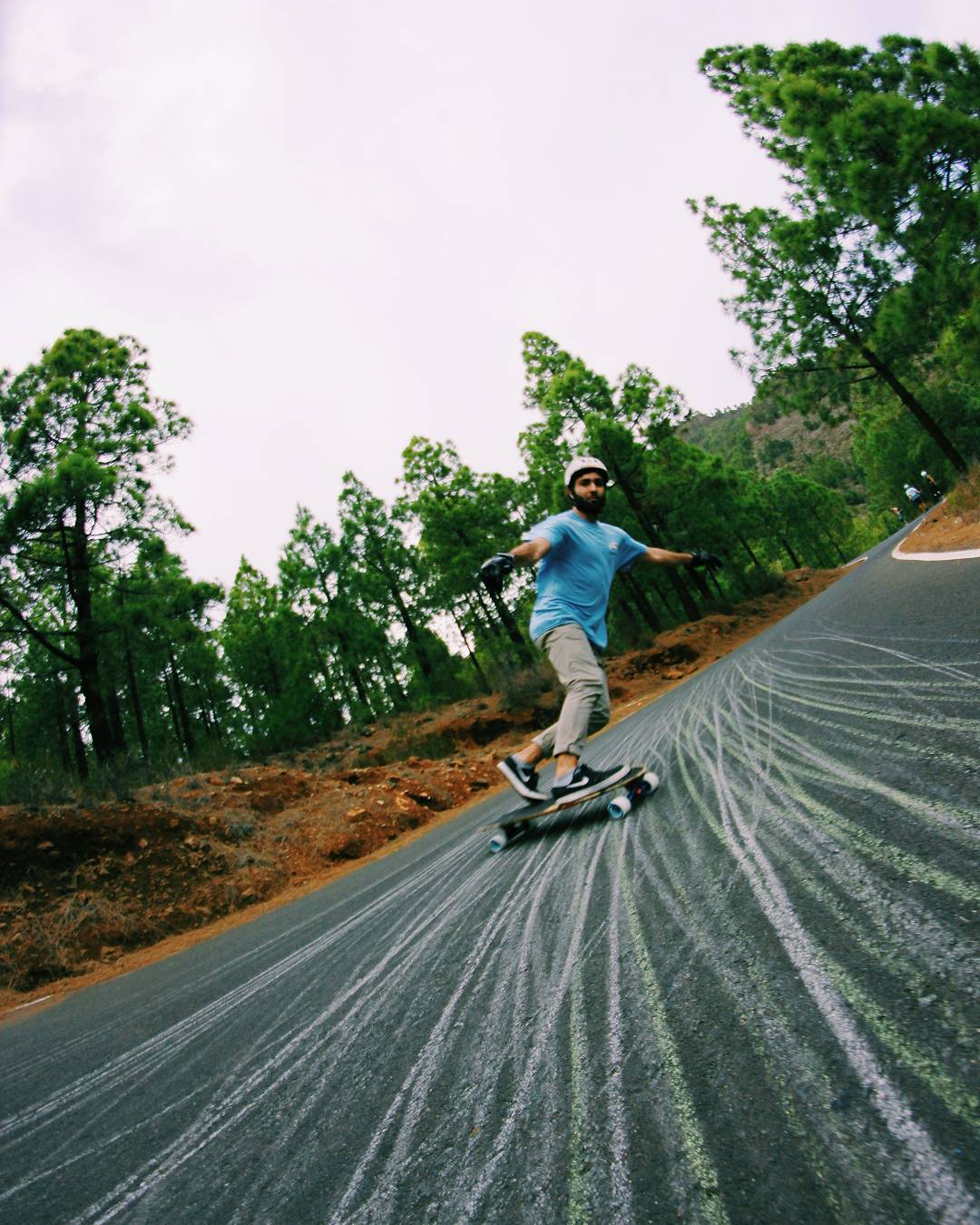
| Freeride | Controlled downhill riding with slides | Closed or controlled hills | Advanced | Predictable symmetrical deck, supportive trucks, slide-oriented wheels |
| Downhill | Speed and efficient cornering | Closed roads or sanctioned courses | Expert, high consequence | Stiff precise deck, stable truck system, grip-oriented wheels, full protection |
Setup descriptions are starting directions, not universal formulas. Rider weight, stance, skill, wheelbase, truck geometry, bushing seat, pavement, and personal preference change the result.
Cruising
Cruising is riding for transportation, relaxation, or general board time rather than tricks or speed. It suits beginners because the rider can practice on flat ground and increase distance gradually. A successful cruiser starts easily, turns predictably, rolls over the route’s normal cracks and debris, and remains comfortable enough to control when tired.
- Core skills: stance, pushing, coasting, turning, foot braking, stepping off at walking speed, and scanning.
- Board priorities: stable standing area, practical ride height, adequate wheel clearance, and wheels suited to pavement.
- Trade-offs: a very low, long board can push efficiently but becomes harder to carry and less agile; a compact cruiser is portable but provides less stance room.
Start with the longboard cruising guide, then use the beginner step-by-step guide for the fundamental sequence.
Carving
Carving means linking deliberate left and right turns by leaning and steering the board. Riders carve for flow, to manage direction on a gentle slope, and as a foundation for other disciplines. It should not be confused with emergency speed control: carving uses road width and may not slow a rider enough on a steep hill.
- Core skills: looking through the turn, progressive heel-side and toe-side pressure, stable knees, and returning to a neutral stance.
- Board priorities: compatible truck geometry, bushings the rider can load, supportive wheels, and verified wheelbite clearance.
- Trade-offs: an extremely turny setup may feel lively at low speed but require more precision; excessive tightness can make the board unresponsive without solving technique.
Start with the guide to turning, then use the longboard carving guide for linked turns, setup choices and practice. Always learn a reliable stop before adding slope.
Longboard dancing
Longboard dancing combines rolling with cross-steps, pivots, spins, and other footwork performed on the deck. It emphasizes control, rhythm, and use of the standing platform rather than speed. Dancing overlaps with freestyle, but a dancing session can focus entirely on steps without aerial or flip tricks.
- Core skills: steady cruising, riding in both stance directions, small weight transfers, foot placement, and looking ahead while moving on the deck.
- Terrain: clean, flat, smooth pavement with generous space and no traffic.
- Board priorities: long usable platform, width appropriate to the rider, predictable flex, and kicks matched to the intended moves.
- Trade-offs: long decks provide room but add swing weight and are harder to carry; excessive flex can make precise steps or landings inconsistent.
A beginner should first practice steps while the board is stationary or moving very slowly, then add one movement at a time. Dancing boards can also cruise, but their size may be inconvenient for crowded routes or transit.
Freestyle longboarding
Freestyle longboarding uses the board for creative flat-ground and obstacle-based tricks such as manuals, pivots, no-comply variations, spins, and ollie-derived movements. It may incorporate dancing, but freestyle places more emphasis on tricks, takeoffs, landings, and combinations.
- Core skills: comfortable riding, switch stance, controlled kickturns, safe stepping off, board retrieval, and progressive landing mechanics.
- Terrain: a legal, smooth, open practice area away from vehicles and pedestrians.
- Board priorities: usable nose or tail, manageable wheelbase and swing weight, durable construction, and predictable pop for the intended trick set.
- Trade-offs: lighter, shorter boards may rotate easily but offer less dancing space; longer boards provide flow and foot room but require more effort to lift and spin.
Do not begin by attempting high-impact tricks on an unfamiliar moving board. Learn controlled rolling, manuals or pivots at low speed, and how to bail without sending the board into people or traffic. The longboard tricks overview helps define what different deck styles can realistically do.
Freeride longboarding
Freeride is controlled downhill riding that uses slides, carves, and direction changes as central maneuvers. Unlike flat-ground freestyle, freeride is defined by slope and deliberate traction release. Unlike racing-focused downhill, the run may prioritize slides and creative lines rather than the fastest route.
- Prerequisites: reliable foot braking, speed awareness, stable cornering, slide progression on controlled terrain, and disciplined route spotting.
- Board priorities: a predictable platform, secure foot reference, trucks and bushings that remain supported under load, and wheels chosen for consistent release and hookup.
- Protection: a suitable helmet and slide gloves are baseline equipment; additional protection should match speed and consequence.
- Trade-offs: wheels that release easily may offer less grip for other riding, while a highly locked-in deck can limit foot repositioning.
Never learn slides in live traffic. Use a closed, legal practice area with a clear runout, a spotter where appropriate, and no hidden intersections, driveways, pedestrians, animals, or surface hazards. Learn each speed-control method before depending on it.
Downhill longboarding
Downhill longboarding focuses on descending efficiently at speed, controlling a tuck, choosing lines, cornering, and braking or sliding before hazards. It is the highest-consequence style in this hub and is not an appropriate starting discipline. World Skate maintains formal downhill skateboarding regulations, which reflect the specialized nature of sanctioned competition.
- Prerequisites: advanced board control, reliable braking and sliding, traffic-free practice experience, route analysis, and mentorship from experienced riders.
- Board priorities: stiff and predictable construction, precise trucks, supportive bushings, appropriate wheel grip, secure hardware, and disciplined maintenance.
- Protection: equipment commonly progresses beyond a basic helmet to a full-face helmet, slide gloves, and impact- and abrasion-oriented protection appropriate to the event or terrain.
- Environment: sanctioned events or properly closed, controlled roads—not open traffic.
A stable-looking board does not make an open road safe. Vehicles, driveways, changing pavement, animals, debris, weather, and sight lines can turn a small error into a severe incident. Do not attempt speed runs alone or beyond the safety plan of a qualified event or experienced group.
Dancing vs freestyle vs freeride
| Question | Dancing | Freestyle | Freeride |
|---|---|---|---|
| Where? | Flat, smooth ground | Flat ground and suitable skate spaces | Controlled hills |
| Main movement | Footwork on the rolling deck | Tricks, rotations, manuals, and combinations | Slides and maneuvers during descent |
| Typical speed | Low to moderate | Usually low to moderate for flat-ground practice | Downhill and consequential |
| Deck emphasis | Long platform | Kicks and manageable rotation | Predictable control and foot security |
| Beginner path | Basic steps after cruising | Low-impact tricks after fundamentals | Only after braking, cornering, and slide prerequisites |
How to choose your first style
- Choose the terrain you can access legally and repeatedly. A discipline is difficult to learn when its practice area is rare or unsafe.
- Choose the movement you actually enjoy. Transportation, flowing turns, footwork, tricks, slides, and racing require different practice.
- Assess consequence honestly. Start with flat ground if you are new or cannot yet stop reliably.
- Use a versatile first setup. A stable cruiser can teach fundamentals before a specialized purchase.
- Delay specialization until preferences are real. Board feel becomes easier to evaluate after regular riding.
If you are unsure, choose cruising and carving on gentle terrain. They build transferable skills without requiring a very long dancing deck, trick-oriented kicks, slide wheels, or speed equipment. Use the longboard selection guide to match deck and components to that initial goal.
How setup priorities change by discipline
| Component | Cruising / carving | Dancing / freestyle | Freeride / downhill |
|---|---|---|---|
| Deck | Comfortable stance and practical height | Platform length, kicks, manageable flex and swing weight | Predictable stiffness, concave and foot reference |
| Trucks | Responsive but supported | Agility balanced with landing control | Precision and stability appropriate to speed |
| Bushings | Accessible lean without wheelbite | Predictable centering through foot movement and impacts | Support matched to truck geometry, load and speed |
| Wheels | Comfort, grip and obstacle rollover | Weight, clearance, durability and intended tricks | Predictable slide or grip behavior for the discipline |
No isolated specification decides the style. Deck, trucks, bushings, wheels, rider weight, stance, and terrain form one system. Read the wheel guide and truck guide before changing components.
A safe progression shared by every style
- Inspect the deck, trucks, bushings, wheels, bearings, and hardware.
- Wear a properly fitted helmet and protection appropriate to the discipline.
- Learn stance, pushing, coasting, turning, and foot braking on flat ground.
- Practice looking ahead and keeping a clear runout.
- Add one variable at a time: a new movement, slightly more speed, or slightly more slope.
- Repeat the skill until it is controlled in both directions where relevant.
- Stop when fatigue reduces stance, coordination, awareness, or braking.
- Never use traffic, pedestrians, or an uncontrolled hill as part of the learning environment.
The U.S. Consumer Product Safety Commission’s skateboard safety guidance recommends protective equipment, equipment checks, staying away from traffic, and avoiding irregular surfaces. Higher-consequence disciplines require additional planning and specialized protection.
Frequently asked questions
What is the easiest longboard riding style?
Flat-ground cruising is the most appropriate entry point. It allows a rider to learn the core controls at low speed before adding tricks, slides, or hills.
Can one longboard do every style?
A versatile board can cruise, carve, and support some basic tricks or dancing, but no setup is optimal for every discipline. The priorities of a long flexible dancer conflict with those of a compact freestyle board or stiff downhill platform.
Is carving the same as cruising?
No. Cruising describes relaxed travel or general riding; carving is the specific act of linking deliberate turns. Carving can be part of a cruise.
Is freeride the same as freestyle?
No. Freeride is downhill riding centered on slides and controlled maneuvers. Freestyle focuses on creative tricks and combinations, commonly on flat ground or suitable skate terrain.
Choose the next skill, not the final identity
Start with the safest skill that moves you toward the riding you want. For most people, that means cruise comfortably, turn both ways, foot brake reliably, and understand the board before specializing. The right style is the one whose terrain, practice demands, equipment, and risk you can support consistently.