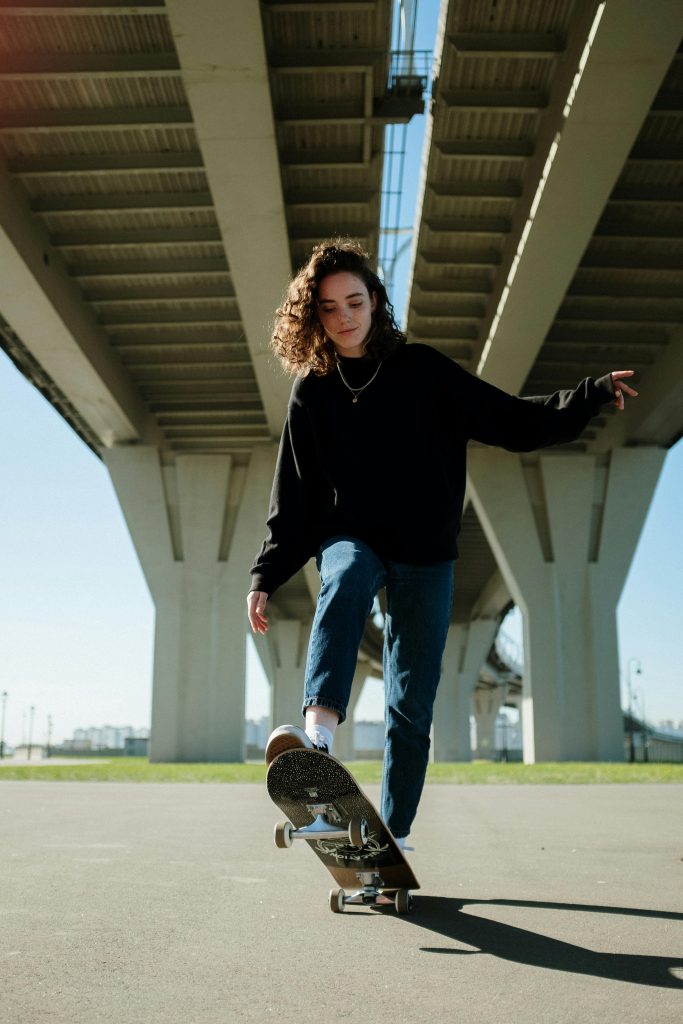
To turn on a longboard, look where you want to go, bend your knees and gradually shift pressure toward your toes or heels. The trucks respond to that weight transfer and steer the board. Start with wide, gentle turns on flat, open ground before trying tighter carving or hills.
This guide explains the movement step by step, how toe-side and heel-side turns differ, how truck adjustment changes steering and what to do when your board refuses to turn—or turns too aggressively.
How Longboard Turning Works
A longboard turns because its trucks pivot when you lean. Pressure on the toe edge makes the board steer toe-side; pressure on the heel edge makes it steer heel-side. You are not twisting the deck with your feet. Your ankles, knees and hips move your centre of mass so the trucks can follow.
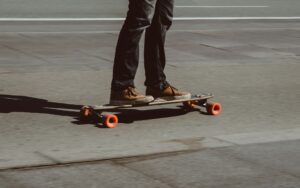
Your stance matters before any turn begins. Keep your feet roughly shoulder-width apart, place them across the deck and maintain soft knees. If this position does not feel natural yet, practise the fundamentals in our longboard stance and foot-placement guide.
How to Turn on a Longboard Step by Step
1. Start at walking speed
Choose smooth, flat pavement with plenty of space and no traffic. Push once or twice and place your back foot on the deck. Learning at low speed gives you time to feel how little pressure a turn actually needs.
2. Look through the turn
Turn your head first and focus on the path you want the board to follow. Your shoulders and hips will naturally begin to align with your eyes. Staring at a curb or obstacle often makes beginners drift toward it.
3. Bend your knees
Lower your centre of gravity slightly without squatting deeply. Relaxed knees absorb small bumps and allow your ankles to apply smooth edge pressure. Straight, locked legs make the board feel unstable and the turn abrupt.
4. Apply gradual toe or heel pressure
For a toe-side turn, press gently through the balls of both feet and let your knees move slightly toward your toes. For a heel-side turn, settle your weight toward your heels while keeping your chest upright. Do not throw your upper body outside the board.
5. Return to neutral
As the board reaches the direction you want, centre your weight over the deck again. Practise one turn at a time, then link toe-side and heel-side movements into wide S-shaped lines.
Toe-Side vs Heel-Side Turns
A toe-side turn usually feels easier because you can see and brace into the direction of the lean. Keep your knees bent and your hips above the board rather than leaning only from the waist.
A heel-side turn can feel less secure because your back moves toward the outside of the turn. Sit back only slightly, keep your chest lifted and avoid straightening your legs. Practise heel-side turns separately until they feel as controlled as toe-side turns.
Turning vs Carving on a Longboard
Turning changes your direction once. Carving links repeated toe-side and heel-side turns into an S-pattern. Wide carving can reduce speed gradually, but it is not a substitute for a reliable braking technique. Learn the methods in our dedicated guide on how to stop on a longboard before riding slopes.
Why Your Longboard Will Not Turn
The trucks are too tight
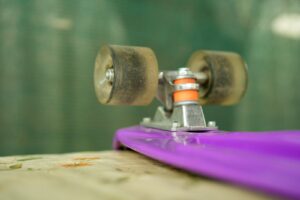
If the board barely responds, the kingpin nuts may be overtightened. Make a small quarter-turn adjustment, test the board and repeat only if necessary. Never loosen the nut so far that it no longer securely engages the kingpin.
The bushings do not suit your weight
Hard bushings require more force to turn, while very soft bushings can feel twitchy. Rider weight, truck geometry and riding style all affect the right setup. Adjust one variable at a time so you can feel what changed.
The trucks may face the wrong direction
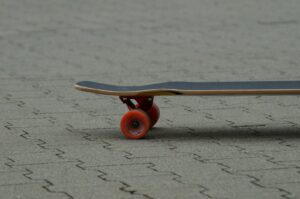
On most longboards, the kingpins point inward toward the centre of the deck. Incorrect installation can create strange steering behaviour. Use our illustrated explanation of which way longboard trucks should face to check the setup.
You are leaning from the shoulders only
The pressure must reach the deck through your feet. Keep your shoulders relaxed and use your ankles, knees and hips together. Dramatic arm movements may help balance temporarily, but they do not replace controlled edge pressure.
How to Practise Carving Safely
Place two visual markers far apart on flat pavement and ride wide S-turns between them. When every turn feels smooth, move the markers slightly closer. Progress to a very gentle slope only after you can steer predictably and foot-brake without looking down.
Wear a certified helmet and appropriate pads, inspect the riding surface and keep away from traffic. Do not use carving as your only speed-control method on a steep hill.
Common Beginner Turning Mistakes
The most common mistakes are looking at the ground, locking the knees, leaning the torso without loading the feet, making sudden movements and practising too fast. Another frequent error is changing trucks, bushings and wheel tightness at the same time, which makes it impossible to identify the real problem.
Frequently Asked Questions
Do you turn a longboard with your front or back foot?
Both feet contribute. The front foot helps guide pressure into the turn, while the back foot stabilises the board. Focus on moving your whole body smoothly rather than forcing one end of the deck.
How loose should longboard trucks be for turning?
They should turn without wobbling or allowing wheelbite. There is no universal number because rider weight, bushings, deck clearance and truck geometry differ. Begin with a stable setup and adjust the kingpin nuts in quarter-turn increments.
Can carving stop a longboard?
Wide carving can reduce speed on a mild slope, but it may require more road width and becomes ineffective when the hill is too steep. Foot braking or another controlled stopping method is still essential.
The Next Skill to Learn
Once you can link smooth turns in both directions, combine this skill with pushing, foot placement and braking in our complete beginner longboarding guide. Build control on flat ground before adding speed.