
Longboard cruising is relaxed, practical riding on mostly flat or gently rolling terrain. The ideal setup is comfortable to push, turns predictably and rolls over imperfect pavement without demanding advanced technique. This guide covers the board, skills and route choices that make cruising safer and more enjoyable.
What makes a good cruising longboard?
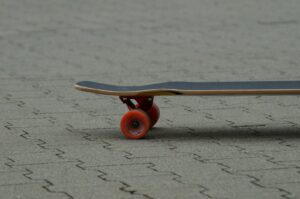
Most cruisers work well between roughly 32 and 42 inches. Shorter boards are portable and agile; longer boards offer more standing room and stability. Pintails feel surfy, drop-through decks push easily and compact top-mounts turn sharply. Start with the riding environment rather than a fashionable shape.
Wheels for cruising
Soft wheels around 78A–83A reduce vibration and maintain grip. Diameters from roughly 65–75 mm suit many setups, provided the deck has enough clearance. Larger wheels roll over cracks more easily but can create wheelbite. Compare options in our best longboard wheels guide.
Trucks and bushings
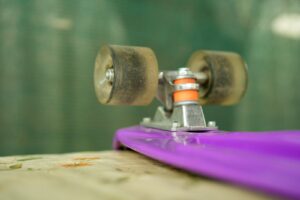
Reverse-kingpin trucks are common on full-size cruisers because they turn smoothly and remain stable. Bushings should match rider weight and the desired response. Do not overtighten very soft bushings to compensate for an unsuitable setup.
Efficient pushing
Keep the front foot near the front bolts and point it mostly forward while pushing. Bend the front knee, keep the hips stable and take smooth strokes rather than reaching too far. Return the back foot to the deck before obstacles or turns. Learn to push with both legs over time to reduce fatigue.
Turning and carving
Look through the turn, bend the knees and shift pressure gradually from heels to toes. The board should respond without forcing the upper body. Our turning and carving guide provides a progression for beginners.
Stopping safely
Foot braking is the essential cruising skill. Practice at walking speed on flat ground before using slopes. Step the rear foot down lightly and increase pressure gradually while keeping most weight over the front leg. Review all five methods in how to stop on a longboard.
Choosing a route
Start on smooth, wide paths with low traffic and good visibility. Avoid steep hills until braking is automatic. Scan for wet leaves, gravel, expansion joints, driveways and pedestrians. A slightly longer flat route is often better than a short route with an uncontrolled descent.
Cruising as transportation
For commuting, consider carrying weight, storage, lighting, weather and whether the board is allowed on public transport. Use a backpack that does not shift while turning. At night, add visible clothing and lights; reflective wheels alone are not sufficient.
Frequently asked questions
Is cruising good for beginners?
Yes. Flat-ground cruising develops balance, pushing, turning and braking without requiring tricks or high speed.
Is a pintail or drop-through better?
A pintail feels lively and surf-inspired; a drop-through is lower and easier to push. The better choice depends on route and preference.
How far can you commute on a longboard?
Fitness, pavement and hills matter more than a fixed distance. Begin with short routes and increase gradually after you can brake reliably.