Longboard bushings are the urethane cushions inside each truck. They control how readily the board leans, how much support it develops through a turn, and how strongly the truck returns toward center. The right setup is not simply “soft for light riders, hard for heavy riders.” Rider weight matters, but truck geometry, bushing shape and height, the bushing seat, washers, deck clearance, and riding style all change the result.
This guide explains how those variables work together and gives you a repeatable way to tune a setup without relying on a universal chart.
What longboard bushings do
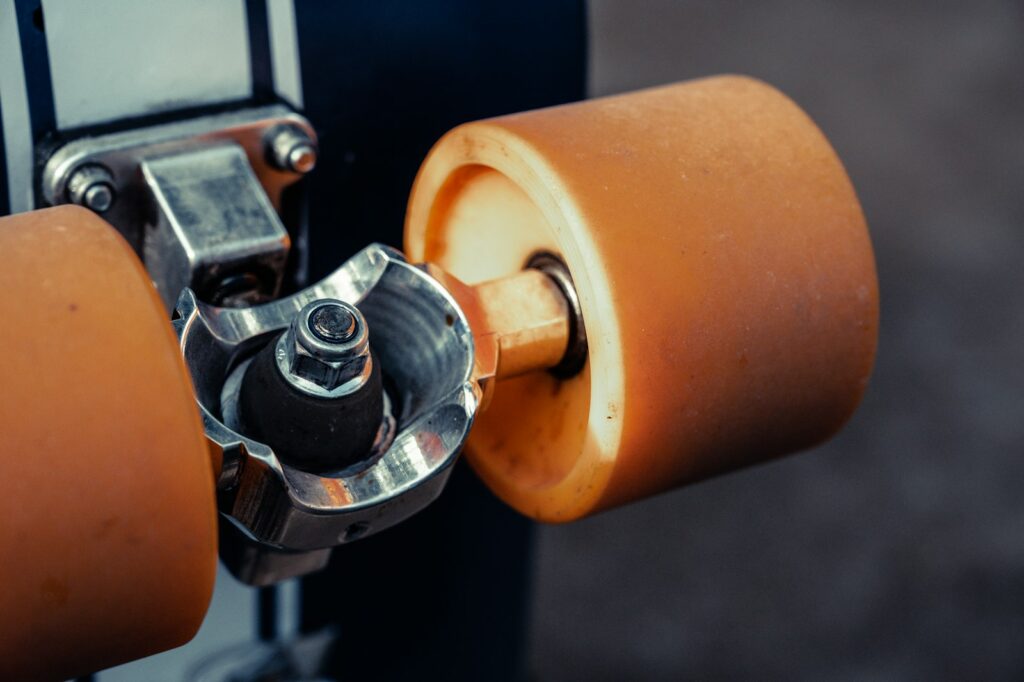
Every conventional kingpin truck uses two bushings around the kingpin. The boardside bushing sits between the baseplate and hanger; the roadside bushing sits between the hanger and kingpin nut. As you lean, the hanger compresses and deforms them. Their resistance helps determine turn initiation, support near the end of the lean, and return to center.
- Softer or less restrictive setups generally need less force to lean and turn, but can feel less supported.
- Harder or more restrictive setups generally resist lean more and offer more support, but can feel unresponsive if they exceed the rider’s leverage.
- More urethane volume usually creates more support than a narrower shape at a comparable hardness.
Bushings are only one part of the steering system. Baseplate angle, hanger width, bushing seat, pivot cup, wheel size, risers, and deck cutouts also affect how the board turns and whether a wheel can contact the deck. Read the longboard trucks guide for the wider system.
Bushing shape: the clearest starting point
| Shape | Typical behavior | Common use | Trade-off |
|---|---|---|---|
| Cone | Easy turn initiation and more lean | Carving, cruising, lighter or less restrictive roadside position | Less support than a barrel of similar height and hardness |
| Barrel | Balanced lean and support | Versatile cruising, freeride, distance, and speed-oriented setups | May feel less lively than a cone |
| Stepped or eliminator-style | More urethane and restriction around the bushing seat | Extra support where the truck and seat are compatible | Can limit lean or fit poorly in some trucks |
| Specialty shapes | Brand-specific balance of turn and support | Fine tuning for a compatible truck | Names and behavior are not standardized across brands |
A common responsive setup uses a barrel boardside and cone roadside. Two barrels provide more support. Those are useful starting points, not universal rules: the truck manufacturer’s fit guidance should take priority.
Durometer and urethane formula
Durometer is a hardness measurement, commonly shown with an “A” rating for skateboard bushings. Lower numbers generally indicate softer urethane and higher numbers harder urethane. A lighter rider often needs a softer option to access the same range of motion that a heavier rider gets from a harder one.
However, the printed number is not a complete prediction. Urethane formulas can rebound, compress, and feel different even at the same nominal durometer. Shape and volume also alter resistance. Use a manufacturer’s weight chart as a starting range for that manufacturer’s product, not as a conversion chart for every bushing on the market. RipTide’s explanations of durometer, shape, and urethane formulas illustrate why all three variables matter.
Compatibility: height, seat, kingpin, and washers
Before choosing hardness, confirm that the bushing physically fits the truck. Longboard bushings are not interchangeable solely because a kingpin passes through them.
- Height: The bushing stack must match the truck’s intended geometry. A stack that is too short or too tall changes how the hanger and pivot sit and may leave inadequate kingpin engagement.
- Bushing seat: An open seat allows more deformation; a restrictive seat supports and constrains the bushing. Some stepped shapes are designed around particular seats.
- Diameter and shape: The bushing must sit flat without binding against unintended parts of the hanger.
- Kingpin length: The nut must engage securely after the bushings and washers are installed.
- Washer type: A flat washer permits more deformation. A cupped washer contains the edge of the bushing and generally feels more restrictive.
RipTide’s bushing-height reference documents several height families and explains why boardside height is especially important. When in doubt, measure the original bushings and consult the truck and bushing makers before ordering.
How to choose longboard bushings
1. Start with the truck, not a generic chart
Identify the truck model, baseplate angle, hanger width, bushing-seat style, stock bushing height, and washer arrangement. Narrower hangers can give the rider less leverage over the bushings; lower-angle and specialty trucks may need different front and rear tuning. A recommendation for one truck is not automatically transferable to another.
2. Define the behavior you want
- Cruising and carving: prioritize accessible lean, smooth return, and enough clearance for deep turns.
- Distance and pumping: seek efficient rebound and a front truck that turns without sacrificing rear support.
- Freeride: favor predictable support and control through setup turns and slides.
- Downhill: prioritize a stable, correctly matched system; speed setups deserve experienced help and progressive testing.
- Dancing and freestyle: balance responsiveness with predictable landings and clearance.
For the broader equipment demands of each discipline, compare the freeride, downhill, and dancing guides.
3. Choose a manufacturer-recommended hardness range
Use rider weight and riding style to select a starting range within one product line. If you are between options, consider your leverage and goal: a rider seeking easy carving may start toward the softer end, while a rider needing more support may start toward the harder end. Do not solve every stability problem by buying the hardest available bushing.
4. Select shape and washers
Choose a shape that provides the required support in the available seat. Keep the stock washer arrangement for the first test unless the manufacturer recommends otherwise. Changing hardness, shape, and washers simultaneously makes the result harder to diagnose.
A safe tuning process
- Install the correct-height bushings and washers in the intended orientation.
- Tighten the kingpin nut until it is secure and the washers are seated. Do not crush the bushings to compensate for a setup that is too soft.
- With protective gear on, test the board at walking speed on flat, smooth pavement away from traffic.
- Lean progressively in both directions. Check for unusual binding, a loose nut, or wheelbite.
- Make one small change at a time, then repeat the same low-speed test.
- Only increase speed after the board behaves predictably throughout the lean you can generate.
A successful setup should turn when you deliberately load it, support you as the lean increases, and return predictably without abrupt binding. It should also maintain deck-to-wheel clearance under the hardest realistic lean. Wear a helmet and appropriate protection; the U.S. Consumer Product Safety Commission’s skateboard safety guidance also recommends checking equipment before riding and staying away from traffic.
Wheelbite: test clearance before riding faster
Wheelbite occurs when a wheel contacts the deck during a turn and can stop the wheel abruptly. Check clearance while the board is stationary and loaded, but remember that dynamic forces can compress a setup farther than a gentle hand test.
Possible corrections include a more supportive compatible bushing, a different washer, additional deck clearance, an appropriate riser, or a smaller wheel. Each changes the ride, so diagnose the cause rather than tightening the kingpin indiscriminately. The longboard wheels guide explains the wheel-side trade-offs.
Common problems and what they usually indicate
| Symptom | Possible cause | What to check first |
|---|---|---|
| Board barely turns | Bushings too hard, too much restriction, or overtightened nut | Manufacturer fit, nut position, shape, and hardness |
| Board feels vague or collapses into turns | Too little support, damaged urethane, or mismatched geometry | Bushing condition, boardside shape, and correct height |
| Truck does not return evenly | Binding, damaged bushing or pivot cup, or uneven assembly | Disassemble and inspect; do not assume hardness is the issue |
| Wheelbite | Insufficient clearance for the available lean | Wheel marks, deck clearance, bushing support, and risers |
| Squeak | Often friction at the pivot cup or bushing interfaces | Inspect and clean using product-safe guidance |
| Cracks, splits, or permanent deformation | Wear, age, incompatible fit, or excessive compression | Replace damaged parts before riding |
For disassembly and inspection procedures, use the truck cleaning guide and the broader longboard maintenance guide.
When to replace bushings
Replace a bushing if it is split, badly cracked, permanently distorted, missing material, or no longer seats correctly. Cosmetic surface marks do not always indicate failure, but any change accompanied by unpredictable steering deserves inspection. Replace uncertain parts before a demanding ride, and recheck the kingpin nut after installation and a short break-in ride.
Frequently asked questions
Should front and rear bushings be the same?
They can be, but they do not have to be. Directional setups often use different truck angles or leverage front and rear, so each end may require different support. Follow the truck maker’s starting guidance and change one end at a time.
Can I mix bushing shapes or durometers?
Yes, when the shapes and heights are compatible with the truck. Mixing can fine-tune turn initiation and support, but record the boardside and roadside positions so you can evaluate the change accurately.
Will tighter trucks stop speed wobble?
Kingpin adjustment can change steering resistance, but wobble also involves stance, weight distribution, skill, speed, truck geometry, and the condition of the complete setup. Do not treat excessive tightening as a safety solution or attempt high-speed testing while learning.
The practical takeaway
Choose longboard bushings as part of a truck system: confirm fit and height first, then select a manufacturer-supported hardness range, shape, and washer arrangement for your weight and riding goal. Test slowly, change one variable at a time, and resolve wheelbite or damaged parts before increasing speed.