Skip to content
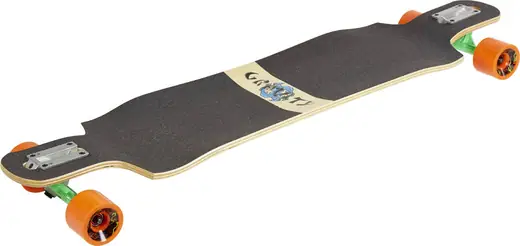
If you searched “Longboard Double-drop”, you’re almost certainly looking for what most riders call a double drop longboard.
That “double-drop” spelling shows up a lot (autocorrect loves sabotaging us), but the concept is simple:
A double drop deck is extra low to the ground because it combines two “drops” in the design:
- Drop-through mounting (the trucks mount through the deck)
- A dropped standing platform (your feet stand lower than the mounting points)
Result: a board that feels stable, comfy to push, and very forgiving—especially when you’re learning.
Let’s break it down properly so you can choose the right one and set it up without accidentally building a sidewalk-plow.
What is a Double Drop Longboard?
A double drop longboard is a deck design that lowers your stance in two ways:
- Drop-through: the baseplate sits on top of the deck, and the hanger/axle sit underneath through a cutout.
- Drop deck / drop-down platform: the part where you stand is lower than the truck mounts.
Why that matters (in real-life terms)
Being lower to the ground changes everything:
- Easier pushing: your pushing foot doesn’t have to travel as far to reach the pavement.
- More stability: your center of gravity is lower, so the board feels less twitchy.
- Less fatigue: especially on commutes or longer rides.
If normal boards feel like you’re standing on a table, double drops feel like you’re standing on the floor.
Double Drop vs Drop-Through vs Drop-Down vs Topmount
This is where people get confused, so here’s the clean version:
Double Drop vs Drop-through
- Drop-through: lower than a topmount, good for cruising.
- Double drop: even lower, usually more comfortable for pushing and distance.
Double Drop vs Drop-down (drop deck)
- Drop-down deck: platform drops, but trucks might still top-mount or drop-through depending on the deck.
- Double drop: explicitly combines drop-through + dropped platform.
Double Drop vs Topmount
- Topmount: more direct control and grip (popular for downhill/freeride).
- Double drop: more comfort and stability, less “raw” road feel.
If your goal is pushing, commuting, distance, relaxed carving, learning slides, a double drop is often the easiest win.
What Double Drop Longboards Are Best For
Double drops are the “comfortable shoes” of longboarding. Not always the flashiest, but they get you far with fewer complaints from your knees.
1) Pushing & commuting
This is the classic double drop use case:
- Push is easier
- Footbrake is easier
- You feel stable even when tired or distracted
2) Long-distance pushing (LDP)
Double drops are common in LDP because:
- Low platform = efficient stride
- Stable platform = less micro-correction
- Big wheels often fit nicely = smoother roll
(If you get deep into LDP, you’ll hear about bracket setups too—but double drop is a fantastic starting point.)
3) Cruising and carving
They carve smoothly and feel planted. Great for:
- paths, promenades, bike lanes
- chill sessions with friends
- “I want to ride, not fight my board” days
4) Freeride / learning to slide
A low platform helps many beginners feel safer initiating slides or speed checks.
Not magic, but confidence is half the battle.
5) Downhill (with conditions)
Yes, some people ride double drops downhill because they’re stable.
But:
- less ground clearance
- can scrape on rough roads or tight turns
- setup matters a lot more
If your main thing is serious downhill, a topmount often makes life easier. If downhill is “occasionally, controlled,” double drop can work.
Key Design Features You Should Understand
Drop depth (how low it is)
- More drop = easier pushing
- More drop = more chance of scraping
If you ride rough pavement, speed bumps, or lots of sidewalk transitions, ultra-low can get annoying fast.
Wheelbase (how stable it feels)
Wheelbase is the distance between the trucks (not the deck length). Generally:
- Longer wheelbase: more stable, better for speed and distance
- Shorter wheelbase: more nimble, quicker turns
Concave (how “locked in” your feet feel)
- Mellow concave: comfy for long rides, easier on feet
- Deep concave: more control for sliding and faster riding
Flex vs stiffness
- More flex: comfy and absorbs rough roads, but can feel “wobbly” at speed
- More stiff: more control, better for speed and slides, but harsher ride
A lot of beginners accidentally buy too flexy, then blame the board when it feels unstable.
Cutouts / wheel wells (wheelbite prevention)
Double drops often run bigger wheels. Great… until you get wheelbite.
Deck design + truck choice + wheel size all need to match.
Pros and Cons of a Double Drop Longboard
Pros
- Super easy to push
- Very stable feel
- Comfortable for cruising and distance
- Beginner-friendly
- Often symmetrical (you can ride either direction)
Cons
- Less ground clearance (scrapes happen)
- Can feel less lively than a topmount
- Not ideal for tricks/dancing
- Setup mistakes (wheels/trucks/bushings) show up fast
Who should avoid a double drop?
- You mainly want dancing/freestyle tricks
- Your routes are curbs, rough roads, lots of bumps
- You want a super “snappy” board feel above comfort
How to Choose the Right Double Drop (Fast Decision Guide)
Step 1: Pick your main goal
- Commuting / everyday: comfort + predictable turning
- LDP: efficiency + big wheels + stability
- Freeride/slides: control + concave + slide-friendly wheels
Step 2: Choose a deck size that fits your stance
- Wider decks feel more planted
- Narrow decks can feel quicker
- Your shoe size and stance width matter more than you think
Step 3: Match wheelbase to your vibe
- If you want stable and relaxed: longer wheelbase
- If you want nimble and turny: shorter wheelbase
Step 4: Choose flex based on weight + terrain
- Rough ground and lighter riders can enjoy some flex
- Heavier riders or higher speed benefit from stiffer decks
Step 5: Check clearance for wheels
If you want big wheels (good for cruising/LDP), make sure the deck design supports them without wheelbite—or plan your setup around it.
Double Drop Setup Guide: 3 Proven Builds
These are “directional” setups—templates you can tweak.
Setup A: Best for commuting & everyday pushing
Goal: smooth, stable, low-effort riding.
- Trucks: stable turning style (commuter-friendly)
- Wheels: medium-to-large, comfy urethane for rougher pavement
- Bushings: medium feel, not too loose, not overtight
Why it works: easy push + confident turning + less fatigue.
Setup B: Best for long-distance pushing (LDP)
Goal: efficiency and comfort over long rides.
- Wheels: larger diameter for speed retention and rolling over cracks
- Bearings: decent quality (smooth roll matters on distance)
- Deck: stable wheelbase and comfortable concave
- Bushings: tuned for stability (distance wobble is a mood-killer)
Why it works: once you’re rolling, you stay rolling.
Setup C: Best for freeride / learning slides
Goal: predictable control and safe speed checks.
- Deck: more supportive concave helps foot placement
- Wheels: slide-friendly shape (easier breakaway and control)
- Trucks: stable and consistent turning
- Bushings: slightly firmer for control
Why it works: you’re not wrestling the board while learning technique.
Quick tuning basics (so you don’t ruin a good setup)
- Too loose: twitchy and unstable at speed
- Too tight: turns like a shopping cart with a bad wheel
- Start moderate, then adjust in small steps.
Tips for Beginners (Double Drop Edition)
1) Start with the basics: stance and calm pushing
- Front foot planted, back foot pushes smoothly
- Keep your weight centered, not leaning over the edge
- Look where you want to go (your body follows your eyes)
2) Learn footbraking early
Footbraking is the “real superpower.”
Practice it on flat ground until it feels normal.
3) Avoid speed wobbles the smart way
- Don’t lock your knees
- Keep weight slightly forward (not leaning back)
- Don’t assume tighter trucks = safer
(sometimes tighter just makes the board unpredictable)
4) Pick practice terrain that doesn’t hate you
- Smooth, flat paths
- Empty parking lots
- Mild slopes only after you can stop reliably
5) Wear the gear that saves you from dumb injuries
At minimum: helmet.
If you’re learning slides: gloves are a very good idea.
Common Mistakes (And How to Fix Them)
Mistake 1: Going “maximum low” and scraping everywhere
Fix: choose a reasonable drop depth and avoid setups that make the board a pavement magnet.
Mistake 2: Wheelbite because wheels/trucks/deck don’t match
Fix: adjust wheel size, bushing stiffness, truck setup, or choose a deck with better clearance.
Mistake 3: Buying soft flex because it “sounds comfortable”
Fix: comfort is good, but too much flex can feel unstable—especially at speed or for heavier riders.
Mistake 4: Using the wrong wheels for your goal
- Cruising/LDP wheels are built to roll fast and smooth
- Slide wheels are built to break traction predictably
Fix: pick wheels for what you actually do, not what looks cool.
Mistake 5: Thinking a double drop makes you invincible
It helps stability, yes.
But technique still matters—especially stopping and speed control.
Recommended Gear (Only What Actually Fits This Topic)
Essentials
- Helmet
- Skate tool
- Spare hardware (cheap, saves sessions)
- Lights if you commute at night (getting seen is underrated)
Nice upgrades that genuinely improve the ride
- Quality bushings (often the best “feel” upgrade)
- Better bearings (especially for LDP/commuting)
- Comfortable grip (your feet will notice on longer rides)
If you’re learning slides
- Slide gloves (your palms will thank you immediately)
Maintenance: Keep It Smooth and Safe
60-second pre-ride check
- Are the trucks tight and consistent?
- Any rattling hardware?
- Wheels spinning freely?
- Any cracks or delamination?
Wheel rotation
Rotate wheels if one side is wearing faster (common if you carve a lot). It keeps the ride smoother and extends wheel life.
Bushings
If the board feels sloppy or weirdly twitchy after months of riding, bushings might be cooked. Replacing them can make the board feel brand new.
FAQ: Longboard Double-drop / Double Drop
Are double drop longboards good for beginners?
Yes—low, stable, easy pushing. One of the most beginner-friendly deck types.
What’s the difference between a double drop and a drop-through?
A drop-through mounts trucks through the deck. A double drop also has a dropped standing platform, making it even lower.
Are double drops good for downhill?
They can be, but clearance and setup matter. For dedicated downhill, many riders prefer topmount for grip and control.
What wheel size is best for a double drop?
Depends on your goal: bigger wheels for cruising/LDP, slide-friendly wheels for freeride. Clearance is the key constraint.
Do double drop decks get wheelbite more easily?
Not inherently—but bigger wheels plus soft setups can cause it. Matching components prevents most issues.
Can you learn to slide on a double drop?
Yes, and many people do. The low platform can feel less intimidating, but technique and safety gear still matter.
What does “double-drop” mean?
It’s usually just a typo for double drop. Same topic, same deck style.
Mini Glossary (Quick and Useful)
- Drop-through: trucks mount through cutouts in the deck
- Drop deck / drop-down: standing platform is lower than the mounts
- Topmount: trucks mount under the deck, platform sits higher
- Wheelbase: distance between trucks (big influence on stability)
- Concave: curve across the deck that helps foot lock/control
- Rocker: lengthwise curve that can increase comfort and “in” feel
- Wheelbite: wheel contacts the deck during turning (bad)
- Bushings: urethane cushions in the trucks that control turn feel
Bottom Line
A Longboard Double-drop (double drop) is one of the best deck styles if you want:
- easy pushing
- stability
- comfort for commuting or long rides
- a forgiving platform while you learn
Just don’t chase “lowest possible” without thinking about clearance, and don’t ignore setup basics. A good double drop setup feels like cheating—in the nicest way.
If you want, tell me your height/weight, shoe size, and what you’ll ride most (commute, distance, slides, hills), and I’ll recommend a setup direction that actually fits you.